
Artificial Intelligence and Augmented Reality in Orthopedic Surgery
Orthopedic surgery is undergoing a remarkable technological transformation. Millimetric precision is no longer a subjective goal but a measurable data point in real time. The convergence of Artificial Intelligence (AI) and Augmented Reality (AR) is redefining the gold standard for complex procedures—from revision arthroplasties to challenging bone reconstructions. In Brazil, this revolution has already moved beyond research labs and begun to integrate into the routine of centers of excellence, although it still faces significant scalability and cost challenges.
The current landscape of AI in Brazilian orthopedics
Artificial Intelligence is already an established reality, especially in image diagnosis and preoperative planning. Advanced software, trained on extensive radiographic databases, assists Brazilian surgeons in the early detection of hidden fractures and in predicting postoperative functional outcomes. According to recent systematic reviews, AI achieves diagnostic accuracy greater than 90% in degenerative and traumatic injuries, serving as a qualified second opinion for the attending physician.
In the operating room, AI discreetly processes data for surgical navigation and robotics. Leading hospitals in São Paulo, Curitiba, and Porto Alegre already use robotic systems like Mako (Stryker) and Rosa (Zimmer Biomet), which rely on AI algorithms to map the patient's specific anatomy and guide bone cuts with submillimetric precision.
Highlight 2026 — mandatory coverage for robotic surgeries
Starting in April 2026, health plans in Brazil will be required to cover robot-assisted radical prostatectomy (total removal of the prostate) for prostate cancer patients—a regulatory change expected to significantly accelerate the adoption of these technologies in the national private sector and expand access to high-precision procedures.
Augmented reality: the “GPS” in the surgeon’s eyes
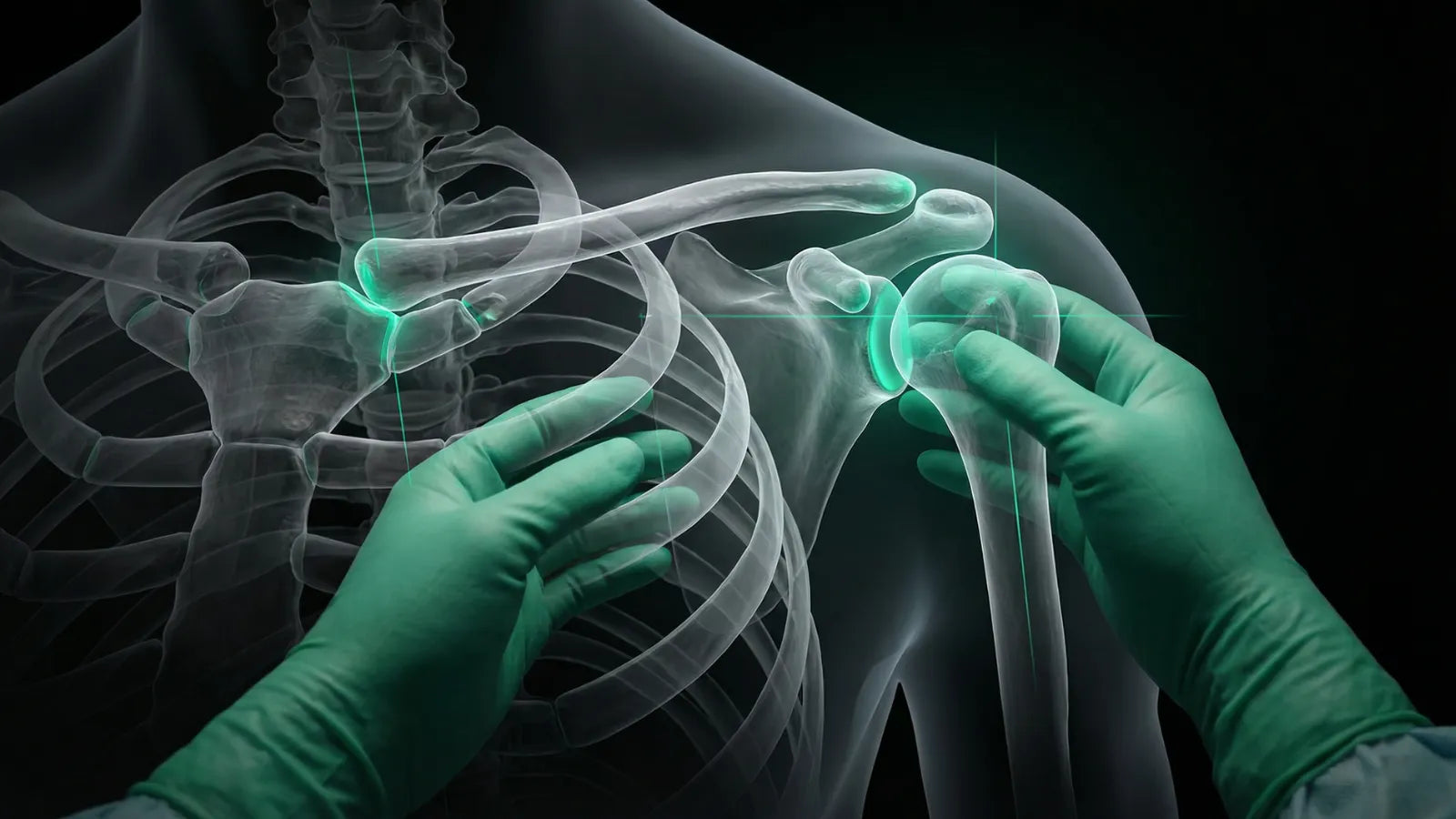
Unlike virtual reality, which isolates the user, Augmented Reality (AR) overlays digital information onto the surgeon's real field of view. Instead of looking away from the patient to consult external monitors, the orthopedic surgeon directly visualizes mechanical axes, internal anatomy, and the ideal implant positioning over the surgical field.
Systems like Pixee—which uses AR glasses to guide knee and hip prosthetic alignment—are already in operation in cities like Juiz de Fora (MG) and Aparecida de Goiânia (GO). The benefits are clear: reduced surgical time, lower intraoperative radiation exposure, and increased implant longevity due to anatomically superior alignment.
Featured technologies in Brazil
-
Technology 01 — Augmented Reality Glasses (e.g., Pixee): Allow for prosthetic alignment and surgical navigation without the need for large external consoles. Expanding in private centers, with isolated cases in the public health system (SUS).
-
Technology 02 — AI-assisted 3D Planning: Creation of personalized anatomical models and surgical cutting guides. Widely available for complex cases and oncological surgeries, with a high adoption rate in centers of excellence.
-
Technology 03 — Robotic Surgery (Mako, Rosa): Performs total knee and hip arthroplasties with AI-assisted robotic arms. Consolidated in large hospitals, with expansion predicted for 2026 following mandatory coverage by health plans.
What is not yet happening in Brazil: challenges and gaps
Despite significant advances, the democratization of these technologies is still a distant prospect. Access within the Unified Health System (SUS) remains restricted to pilot projects or leading university hospitals, and dependence on foreign hardware and software significantly increases input costs. The absence of a national production chain for Extended Reality (XR) is a structural bottleneck that limits the dissemination of these tools beyond major centers.
Another crucial point is medical training. Orthopedic and Traumatology residencies in Brazil still focus, by necessity, on conventional techniques. There is a gap in structured training for the use of extended reality tools, which could create a growing technical disparity between surgeons working in different market segments.
The future of bone reconstruction
The full integration of AI with real-time AR—where dynamic three-dimensional models are projected directly onto complex fractures during surgical reduction—represents the next step in this revolution. For experienced surgeons, these tools are allies in the pursuit of technical perfection. For residents, they are educational instruments that compress the learning curve from years to months.
Brazil is moving towards becoming a regional hub for surgical technology. The success of this journey, however, will depend on the ability to integrate these innovations into traditional clinical reasoning—ensuring that technology serves the greater purpose: restoring patient mobility and quality of life.
Sources
Brazilian Society of Orthopedics and Traumatology (SBOT) · Brazilian Journal of Orthopedics (RBO) · National Supplementary Health Agency (ANS) · SciELO Brazil