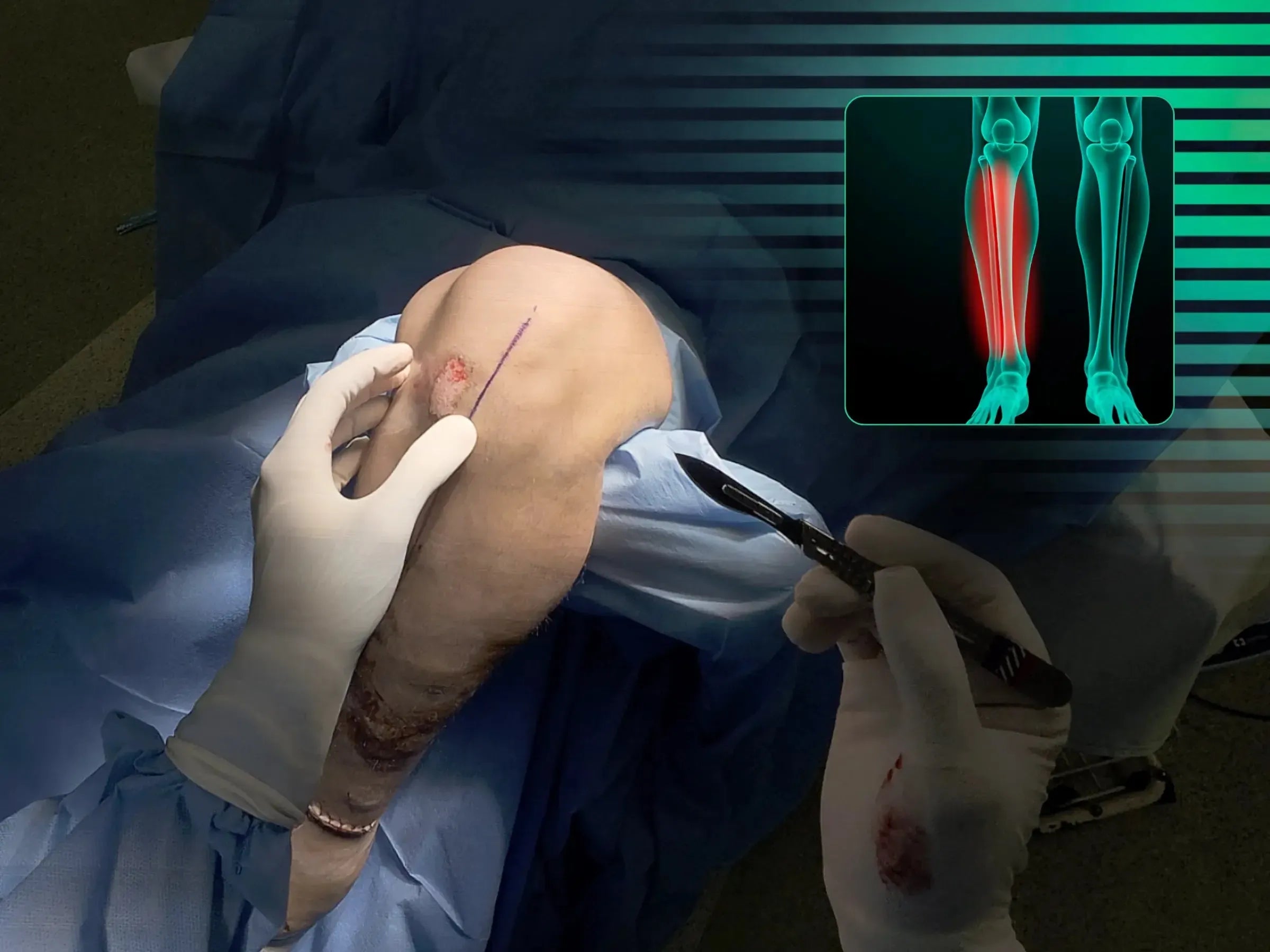
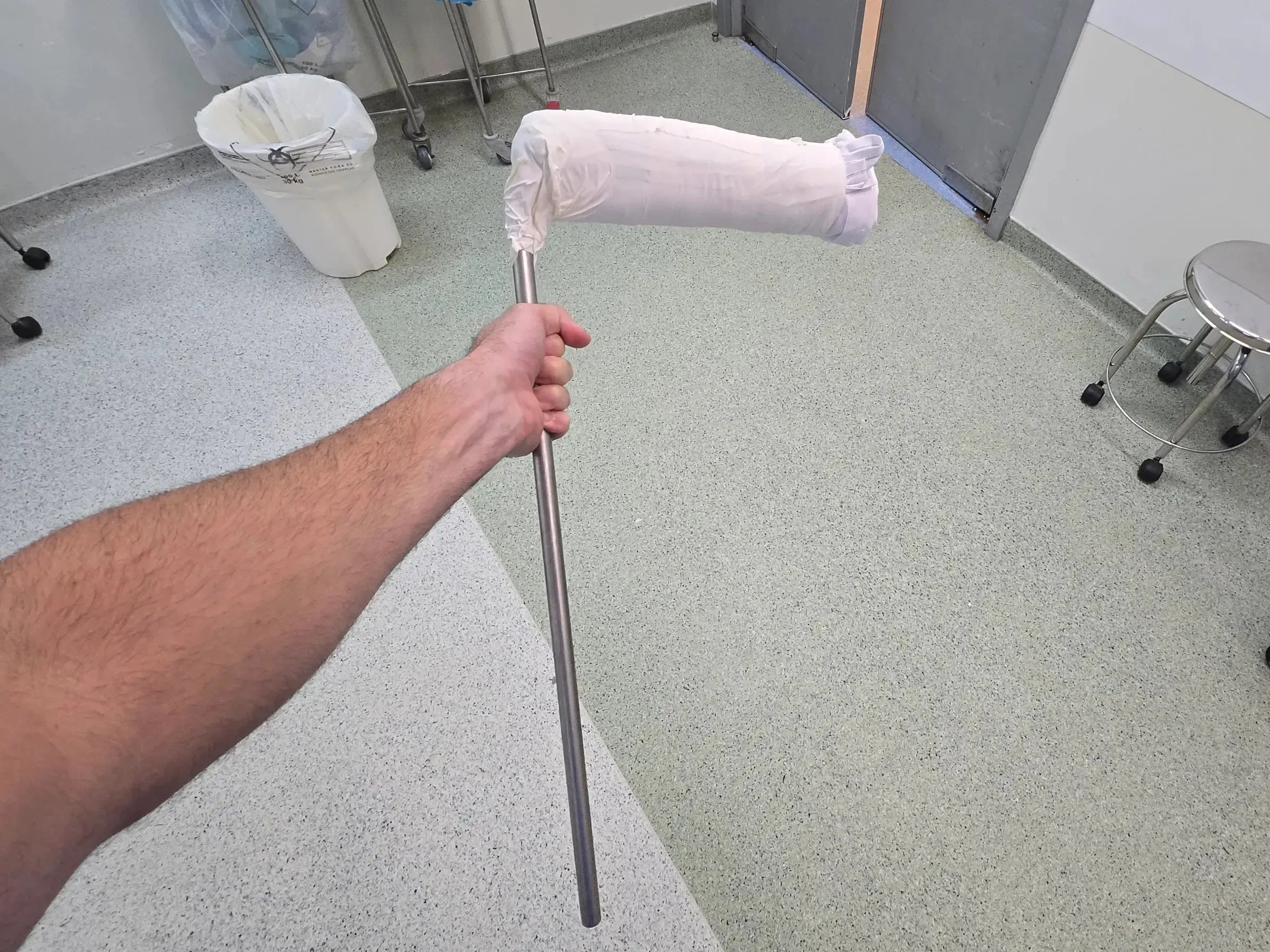
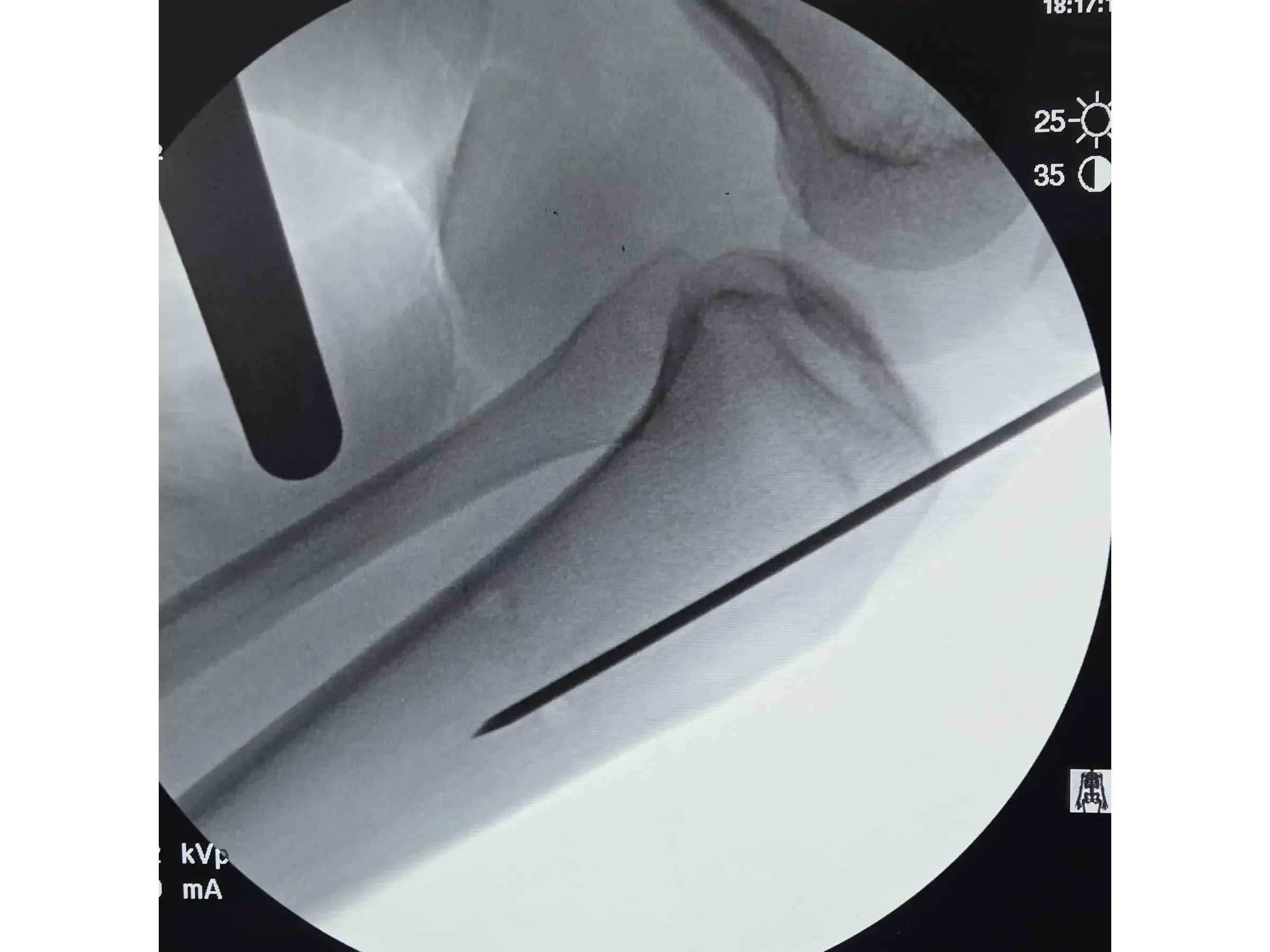
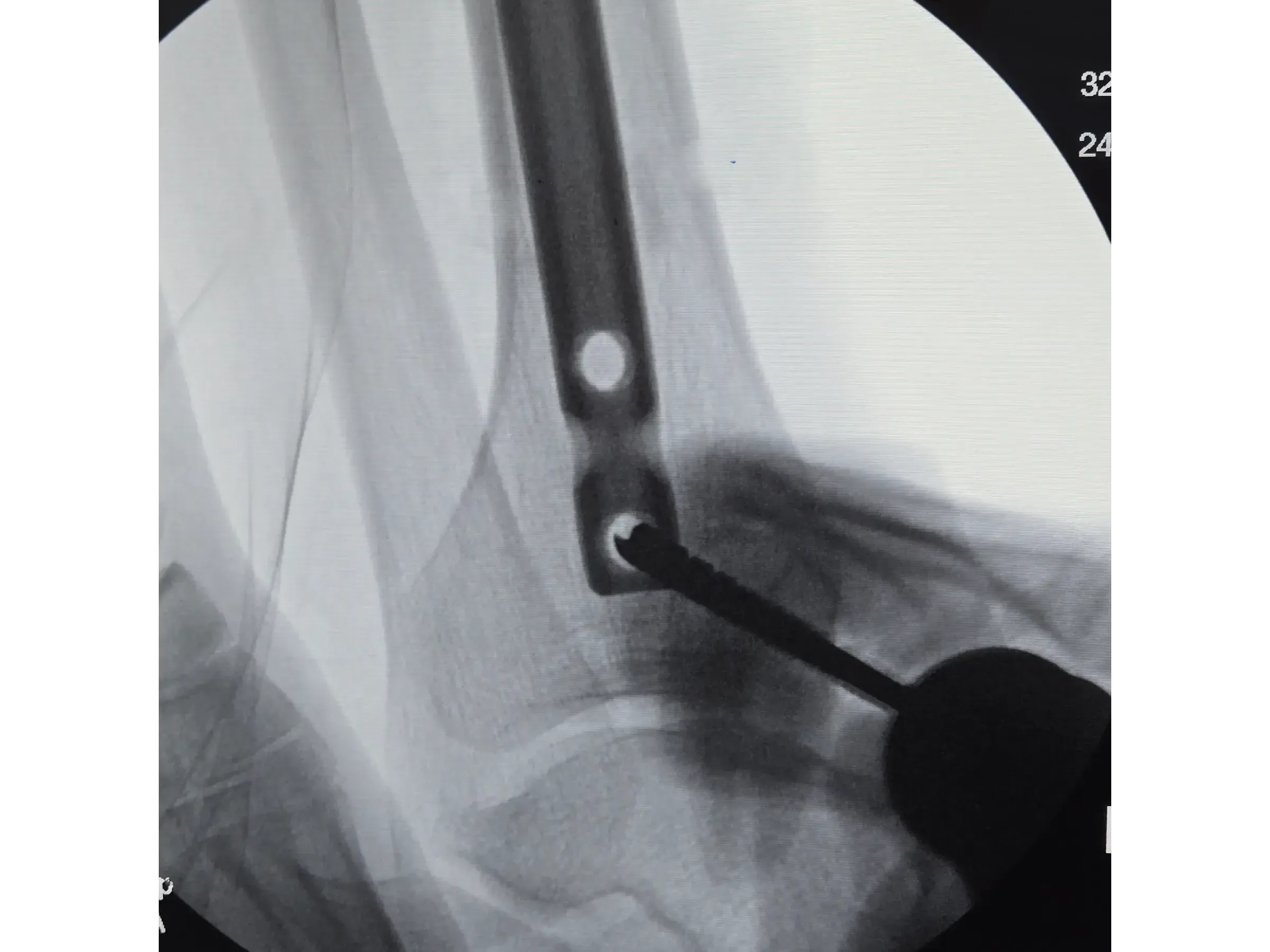
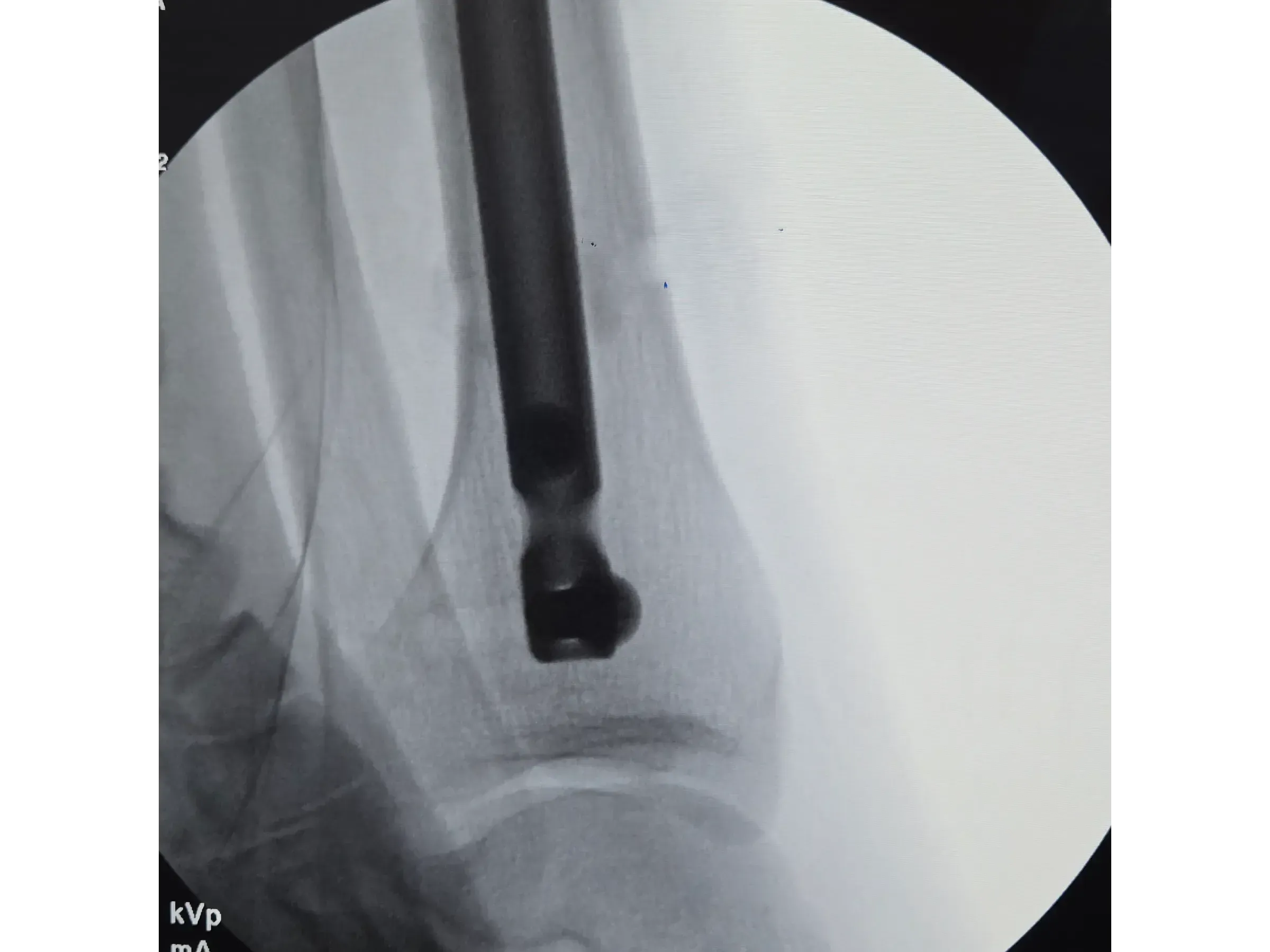
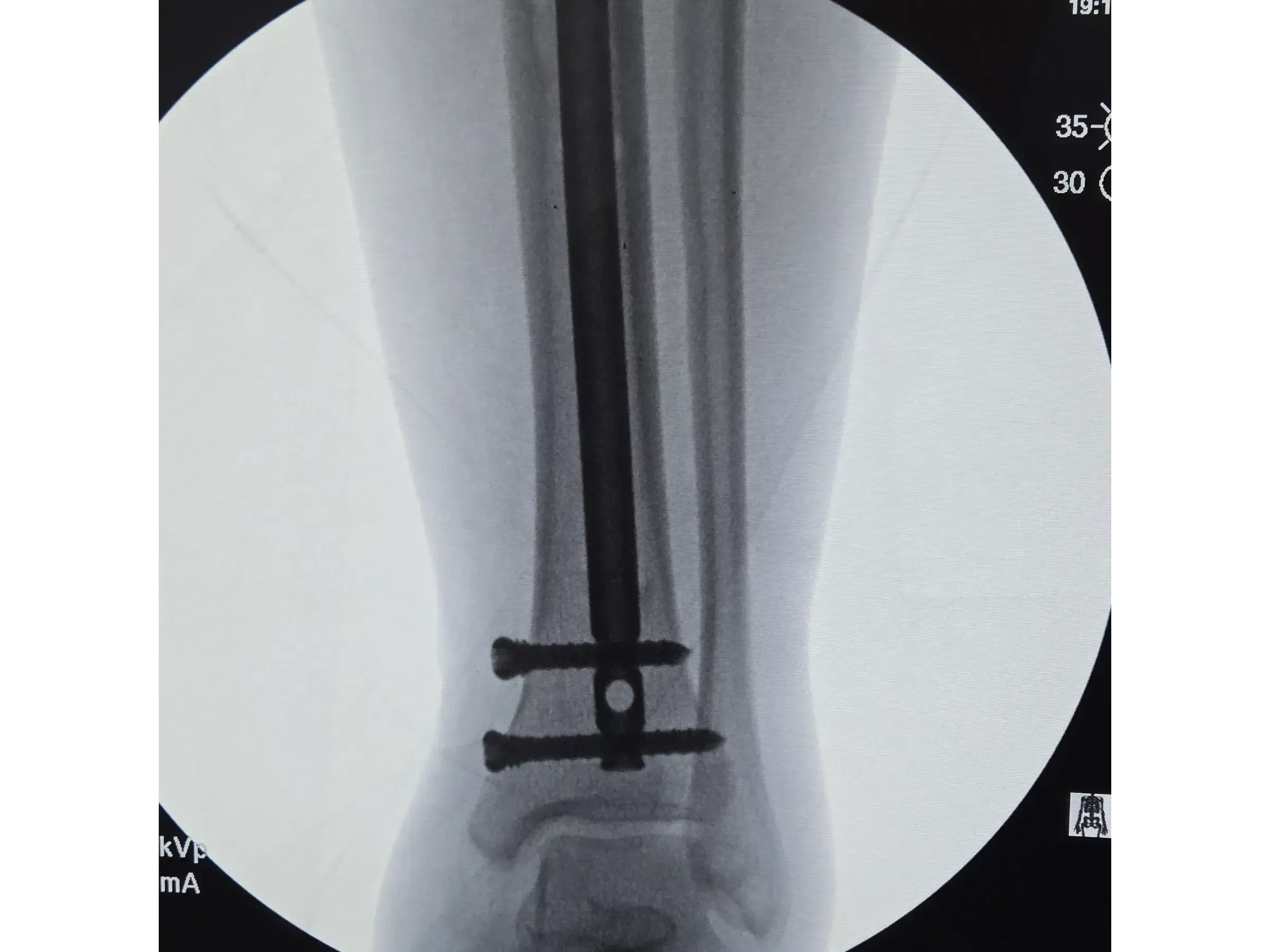
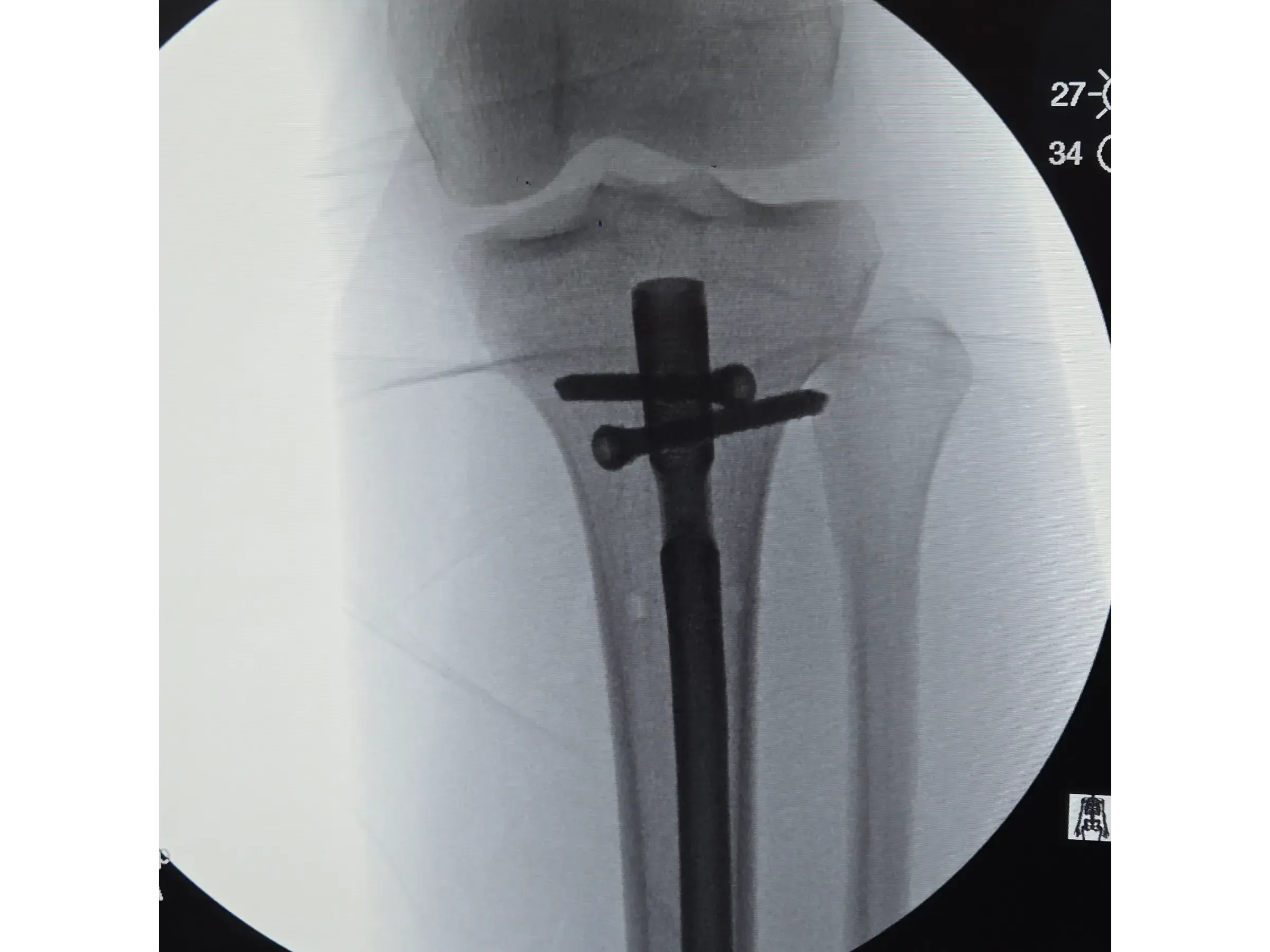
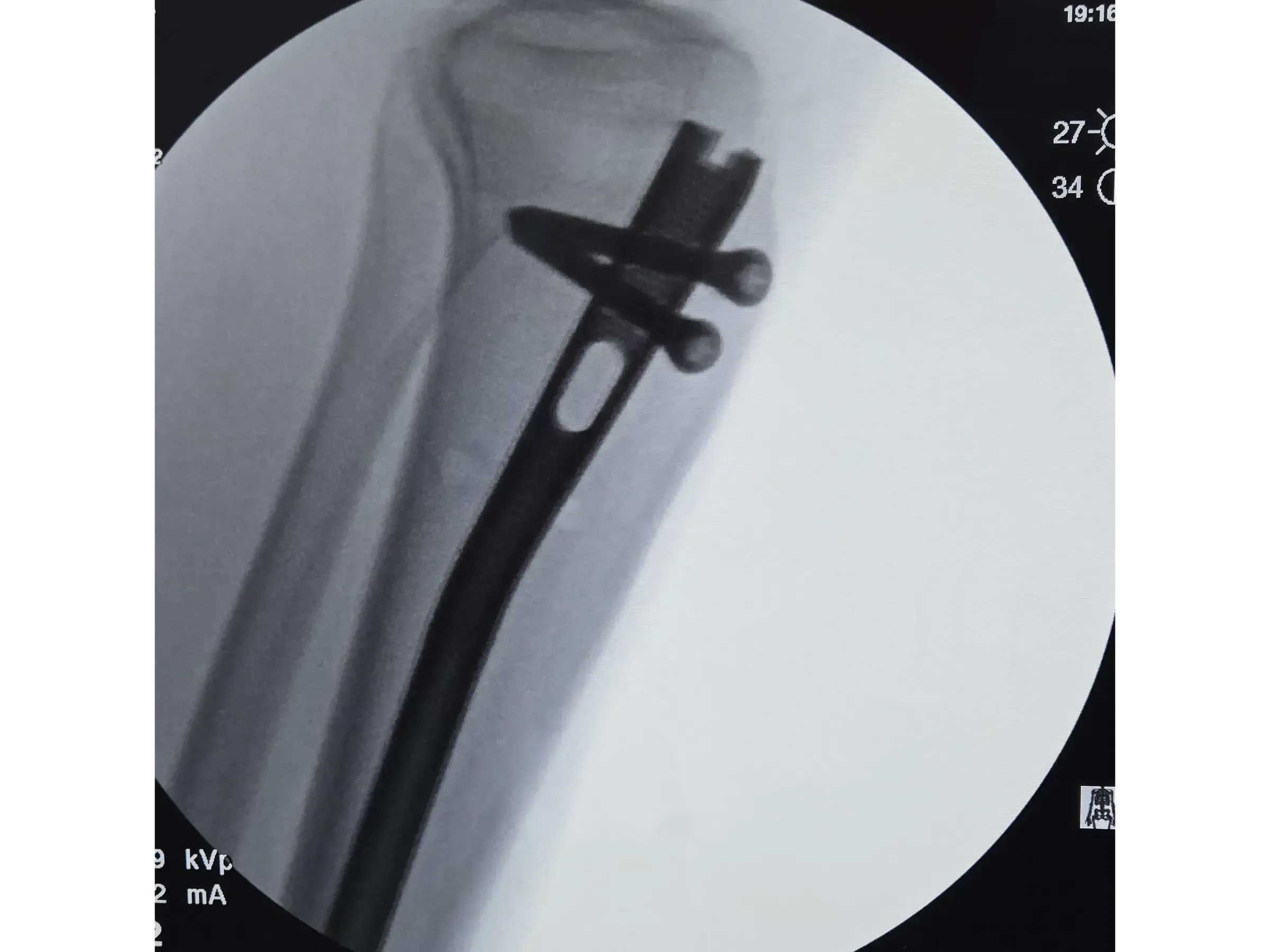
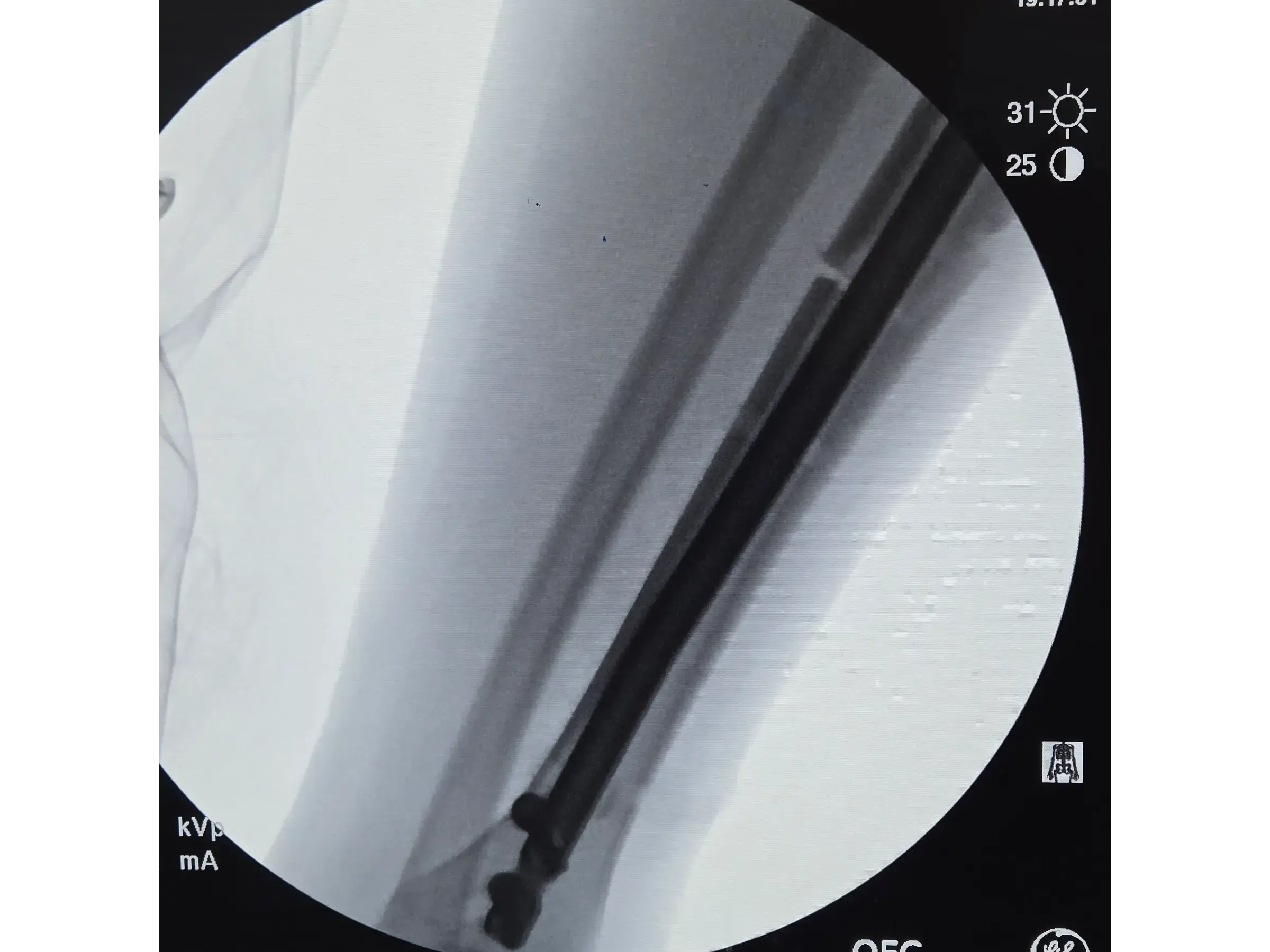
The stabilization of diaphyseal tibial fractures requires precision in the entry portal, axial alignment, and soft tissue protection. This training presents, in an objective and practical way, the technique of intramedullary nail implantation via the infrapatellar approach, with a detailed demonstration of surgical steps, radiographic control, and minimally invasive execution from a technical perspective.
Training Focus:
Strategic patient positioning for optimal knee flexion;
Anatomical marking and precise definition of the tibial axis;
Infrapatellar access with preservation of the paratendon and patellar tendon;
Safe introduction of the guide wire and olive-tipped wire with radiographic control;
Soft tissue protection during reaming and milling;
Correct measurement and appropriate reaming of the medullary canal;
Insertion of the intramedullary nail and checking of its positioning;
Proximal and distal locking with a minimally invasive approach;
Anatomical closure and post-operative evaluation.
Detailed Content:
Optimized Patient Positioning: Strategies for achieving adequate knee flexion, facilitating alignment and access to the entry portal;
Precise Anatomical Reference: Marking techniques with dermographic pen and Kirschner wire to ensure anteroposterior and lateral alignment;
Safe Infrapatellar Access: Linear incision with preservation of the paratendon and patellar tendon, allowing for anatomical closure and reduced morbidity;
Efficient Radiographic Control: Methods to prevent posterior guidance of the guide wire and ensure centralization of the olive-tipped wire;
Tissue Protection During Reaming: Proper use of the soft tissue protector to prevent tendon injuries and anterior cortical damage;
Precise Medullary Canal Reaming: Parameters for choosing the ideal diameter and preparing the canal without risk of fissures;
Nail Insertion with Stability: Techniques to prevent prominence, ensure adequate advancement, and minimize trauma when removing the olive-tipped wire;
Minimally Invasive Proximal and Distal Locking: Execution of crossed and distal locking with small portals and intensifier control;
Post-Implant Evaluation: Criteria to confirm stability, alignment, and absence of nail prominence.
Included Material:
Detailed PDF with technical sequence, anatomical references, reaming parameters, and soft tissue care.
Elevate your precision in tibial osteosynthesis. Enroll now and enhance your execution of the infrapatellar technique with safety and efficiency.
Acho que falta TTO CIRÚRGICOS DE FEMUR DISTAL COM DCS .
Tratamento de fêmur com placa condilar bloqueada .
Não encontrei o acesso lateral ao fêmur . Tratamento de fratura do fêmur distal articulares ou do 1/3 distal do fêmur .
Store owner replied:
Bom dia, Francisco.
Muito obrigado pela sua avaliação.
A nossa plataforma está no ar há apenas um ano e já conta com quase 100 procedimentos publicados. Além disso, seguimos lançando dois novos vídeos todos os meses.
Naturalmente, à medida que novos casos e diferentes padrões de lesão surgem na minha prática cirúrgica, vou registrando os procedimentos e incorporando esse conteúdo à plataforma.
Pode ter certeza de que estamos trabalhando intensamente para ampliar esse acervo. Nosso objetivo é que, em pouco tempo, a plataforma tenha um portfólio capaz de contemplar praticamente toda a especialidade de trauma ortopédico.
Um grande abraço!
Eu levo para as minhas cirurgias muitas dicas que facilitam a redução e fixação das fraturas ! Muito bom mesmo e continue com mais vídeos ! 🫡
Store owner replied:
Muito obrigado pela sua avaliação, Ronaldo.
Fico muito feliz em saber que o conteúdo está contribuindo para os resultados das suas cirurgias. Receber esse tipo de retorno de um colega experiente tem um valor enorme para nós e reforça que estamos no caminho certo.
Mesmo assim, seguiremos evoluindo continuamente, sempre em busca de conteúdos cada vez melhores e mais úteis para os colegas.
Um forte abraço.
Conteúdo de excelente qualidade, técnico e só recomendo a todos . As dicas e posicionamentos são perfeitos, parabéns Sávio
Store owner replied:
Valeu, Fabrício!
Muito obrigado pela sua avaliação. Ela é muito importante para nós e para o crescimento da plataforma.
Seguiremos empenhados em trazer conteúdos cada vez melhores, buscando sempre nos superar e oferecer o melhor material possível para os colegas.
Um forte abraço!
Gostaria de saber se tem cirurgias de fratura de calcâneo ou de Talus?
Store owner replied:
Obrigado pela sua avaliação, Nattan.
Lançamos dois novos vídeos por mês e seguimos ampliando continuamente o conteúdo da plataforma. No momento, ainda não temos vídeos sobre tálus ou calcâneo, mas esses temas estão nos nossos planos futuros de expansão.
Agradeço pela sugestão e pelo interesse no projeto.
Perfeito pois mesmo após 23 anos de formado ainda aprendo com os vídeos de dr Sávio pois vai exatamente na prática da cirurgia com detalhes do procedimento que faz toda a diferença para um resultado excelente de uma cirurgia 👏👏👏
Store owner replied:
Obrigado pelo seu retorno, Rodrigo. Sua avaliação é muito importante para nós e contribui diretamente para a evolução da plataforma.
Fico muito feliz em saber que você está aproveitando o conteúdo e percebendo o valor técnico que buscamos entregar em cada material.
Um grande abraço.
Store owner replied:
Ricardo, muito obrigado pela sua avaliação e pelas suas observações. A plataforma ainda é relativamente nova, mas estamos construindo um acervo com foco em qualidade e profundidade técnica.
Todos os vídeos são baseados em cirurgias reais, documentadas em alta resolução e narradas passo a passo, o que exige um processo cuidadoso de produção. Mantemos o compromisso de publicar dois novos procedimentos todos os meses e já contamos atualmente com cerca de 70 cirurgias disponíveis.
Nos próximos meses esse número continuará crescendo e, com certeza, a plataforma se tornará cada vez mais completa
Buenas noches, el contenido que he revisado me ha parecido interesante, pero tiene un problema desde un principio, que los pocos minutos de correr el video, marca que hay un error y hay que volverlo a iniciar, y asi en varias ocasiones que a decir verdad, pasa cada 20 segundos. espero que se pueda corregir eso. muchas gracias
Store owner replied:
Hola, Juan Carlos. Muchas gracias por tu respuesta. Ya estamos contactando de inmediato a la plataforma responsable del alojamiento de los videos para solicitar la corrección de este error, que es algo nuevo para nosotros. Hasta el momento no habíamos tenido ningún problema similar, pero estamos totalmente comprometidos en solucionarlo lo antes posible.
Muito top! Foque também no pocisionamento do paciente antes da cirurgia, sabemos que o pocisionamento é tudo para um procedimento cirúrgico perfeito
Store owner replied:
Muito obrigado pela avaliação, Artur. Sua observação é, sem dúvida, muito importante para nós. Estamos trabalhando em vídeos cada vez mais detalhados, incluindo o aprofundamento no posicionamento cirúrgico.
Seguimos evoluindo sempre.
Um forte abraço.
Store owner replied:
Muito obrigado Eron!. Estamos trabalhando para trazer conteúdos cada vez melhores. Grande abraço.
Excelente trabalho e iniciativa. De fato um produto que só tem a somar e agregar conhecimento técnico cirúrgico na prática do trauma ortopédico. Parabéns por compartilhar e difundir sua experiência e conhecimento!
Store owner replied:
Agradeço imensamente sua avaliação, Raul Barbosa. Seu incentivo é de grande importância.
Dedicarei meus esforços para oferecer conteúdos de alto valor.
Com os melhores cumprimentos.
Faltam muitos vídeos de cirurgias eletivas do pe e tornozelo
Store owner replied:
Matheus, a nossa plataforma é predominantemente direcionada à cirurgia do trauma ortopédico, com foco em técnicas aplicadas ao dia a dia do centro cirúrgico. Novos conteúdos têm sido lançados de forma contínua, sempre com atualização técnica e detalhamento passo a passo.
Para os próximos anos, o projeto é ampliar o escopo trazendo subespecialistas, permitindo uma abrangência maior dentro das diversas áreas da ortopedia — incluindo cirurgias eletivas de pé e tornozelo — de modo a oferecer um acervo completo e cada vez mais especializado.
Store owner replied:
Muito obrigado Mateus! Estaremos evoluindo sempre!
Vídeos, imagens ,de excelente qualidade, com alto nível de conteúdo e didática aprimorada. Está me ajudando muito esse tipo de compartilhamento de experiências.
Store owner replied:
Muito obrigado pela avaliação Leonardo Miyazawa. Estarei buscando evoluir sempre com os conteúdos. Grande abraço!
Sou residente de ortopedia e entusiasta do trauma ortopédico. Acompanho os vídeos do Dr. Sávio há algum tempo, mas assinar a plataforma foi uma virada de chave. As aulas têm sido transformadoras na minha formação, especialmente pela forma didática com que ele conduz cada caso e explica o raciocínio cirúrgico.
Assistir às cirurgias sob a perspectiva de um ortopedista experiente e renomado tem me permitido entender nuances técnicas que dificilmente se aprendem nos livros ou apenas dentro do centro cirúrgico.
Recomendo o curso a todos que desejam aprimorar sua visão prática e aprofundar o domínio em trauma ortopédico.
Store owner replied:
Valeu, Bernardo! Muito obrigado pela sua avaliação e pela sua mensagem. Estarei sempre atualizando a plataforma e trabalhando forte para trazer conteúdos cada vez melhores. Muito obrigado e um grande abraço.
Excelentes vídeos cirúrgicos em que o cirurgião compartilha ensinamentos valiosos e práticos no dia a dia cirúrgico .Parabens pela iniciativa e execelente ideia 👏👏👏
Store owner replied:
Muito obrigado Loamir! Aprimorando sempre!
Sou R1 de Ortopedia na PUC-SP e acabei de assinar a plataforma Reconstrução Óssea. Queria agradecer ao Dr. Sávio Chami pelo quanto esse conteúdo tem feito diferença no meu aprendizado. A metodologia SNIPER realmente traz uma forma diferente e imersiva de aprender, que facilita muito a assimilação dos procedimentos e ainda estimula o raciocínio pré-operatório.
Store owner replied:
Muito obrigado pela sua avaliação, Pietro. Depoimentos como o seu nos motivam a seguir em frente com ainda mais dedicação. Pode contar comigo, e já adianto que em breve estarei disponibilizando documentações cirúrgicas ainda mais completas e valiosas, que certamente irão contribuir muito para o aprendizado prático.
Muito bom, preciso que os demais videos sean muito educativos, explicando accesos, referencias anatomicas.
Store owner replied:
Muito obrigado pela sua avaliação, Patrícia, e pelo retorno tão cuidadoso. A partir de agora, seguiremos com a metodologia aplicada nos últimos vídeos: cirurgias apresentadas em detalhes, desde o acesso cirúrgico até o fechamento final. Os vídeos terão uma duração maior, mas estarão repletos de pequenos detalhes técnicos que considero fundamentais para o aprendizado prático.
I subscribed to Reconstrução Óssea and was impressed from day one. The site is clean, fast, and intuitive—finding what I need takes seconds. The 4K videos are superb: crisp visualization of the field, excellent color and contrast, and stable camera work that makes reduction and implant positioning easy to follow. The commentary is clear and practical, with a straight-to-the-point style that respects my time. Worth every cent.