
Distal Tibial Diaphyseal Fracture via Intramedullary Nail with Suprapatellar Approach
Treat distal tibia with IM nail and suprapatellar route in sharp 4K.

Dr. Savio Chami
Médico Ortopedista
Disponível em::









Videos em 4k
Dublagem Profissional
Escolher opções
Distal Tibial Diaphyseal Fracture via Intramedullary Nail with Suprapatellar Approach
Preço promocionalR$ 0,00
Dr. Savio Chami
Médico Ortopedista
Questions & Answers loading...
Descrição
Enhance your skills in treating distal tibial shaft fractures, especially in elderly patients, aiming for early rehabilitation and ambulation. This training offers a technical immersion in intramedullary nail osteosynthesis with a suprapatellar portal, optimizing alignment and minimizing invasiveness.
Training Focus:
- Treatment of distal tibial shaft fractures in elderly patients.
- Fixation with an intramedullary nail.
- Suprapatellar access technique.
- Optimization of alignment and stability for early rehabilitation.
- Minimization of invasiveness and protection of soft tissues.
Detailed Content:
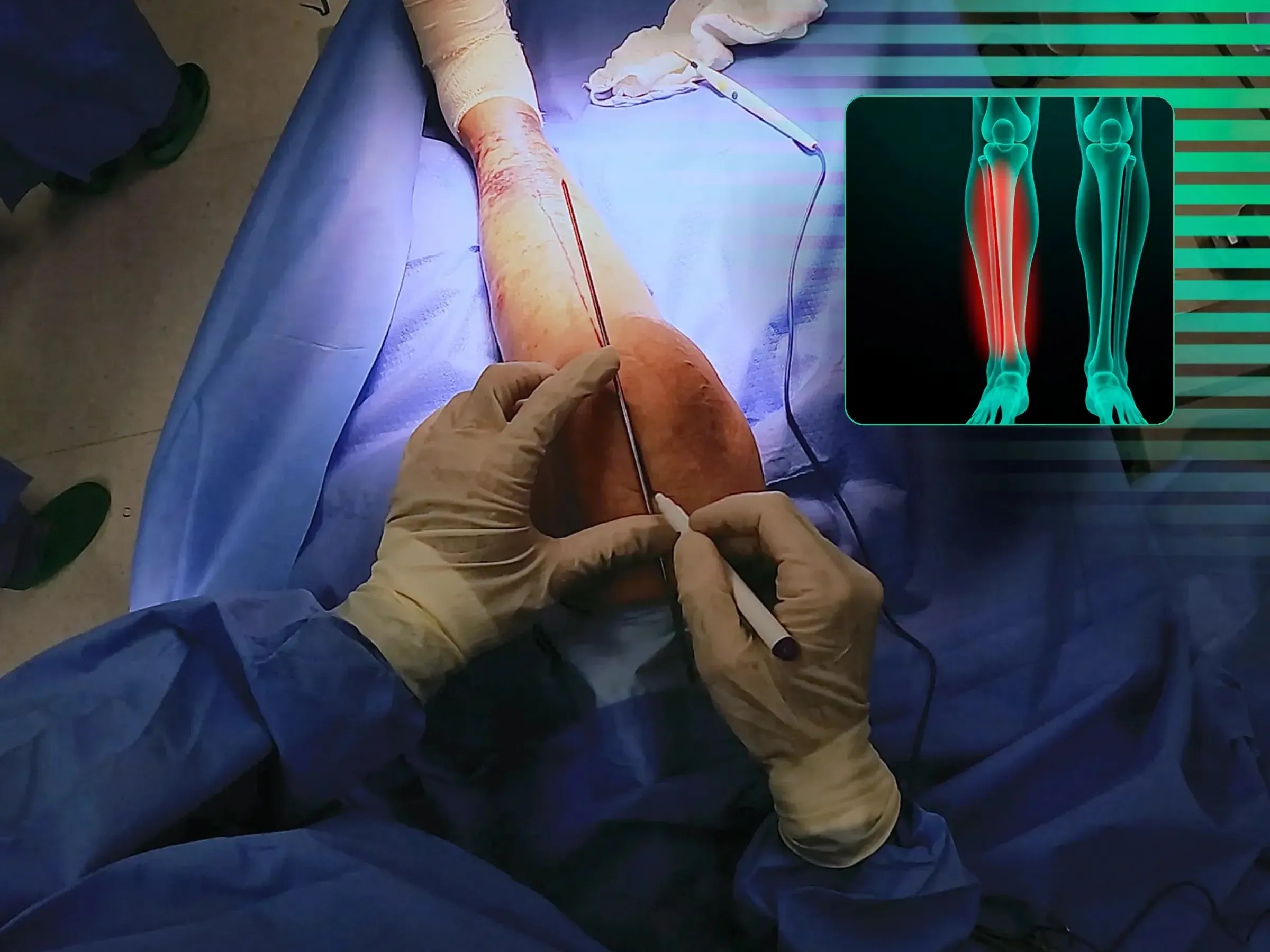
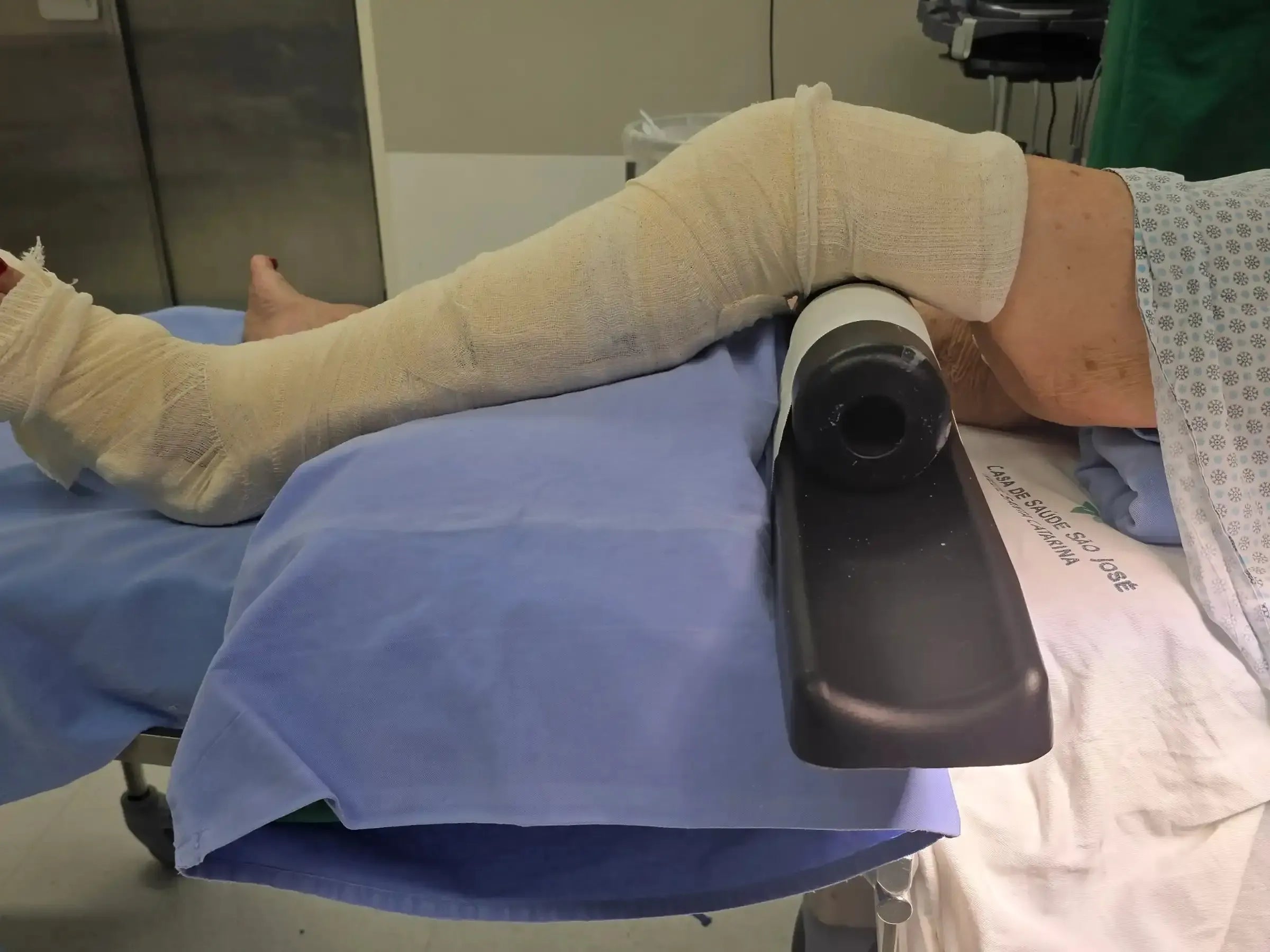
- Strategic Patient Positioning: Methodology for positioning with the knee in semi-flexion and diaphyseal alignment guided by palpation of the tibial crest, crucial for avoiding soft tissue complications.
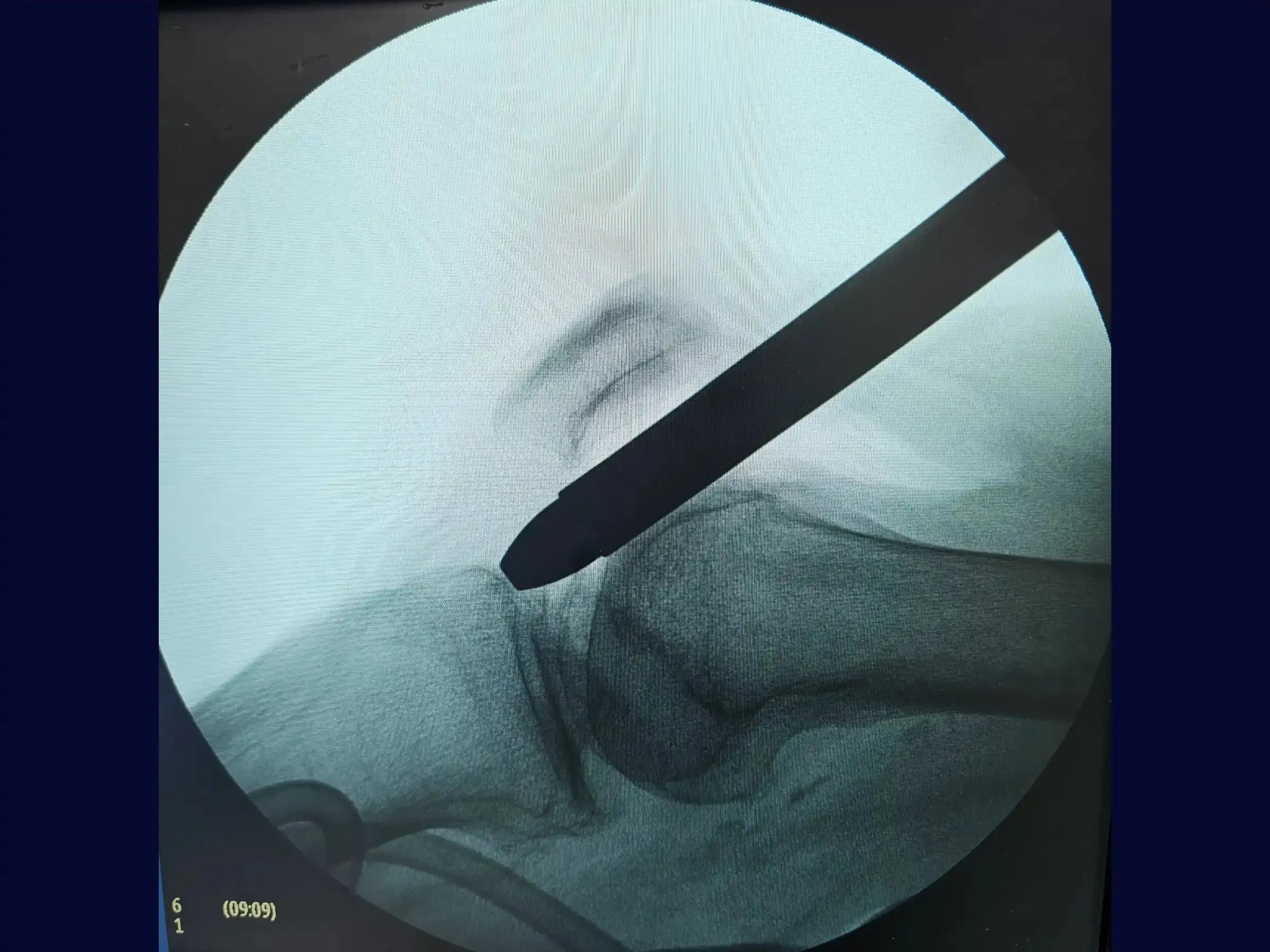
- Precise Suprapatellar Portal Creation: Techniques for skin marking and access with an electrocautery, with positioning in the inferior region, near the trochlea and the apex of the patella, using a protective sleeve to preserve articular cartilage.
- Optimized Angle of Attack: Benefits of suprapatellar access for a superior angle of attack, facilitating guidewire passage and reaming with greater comfort and ease.
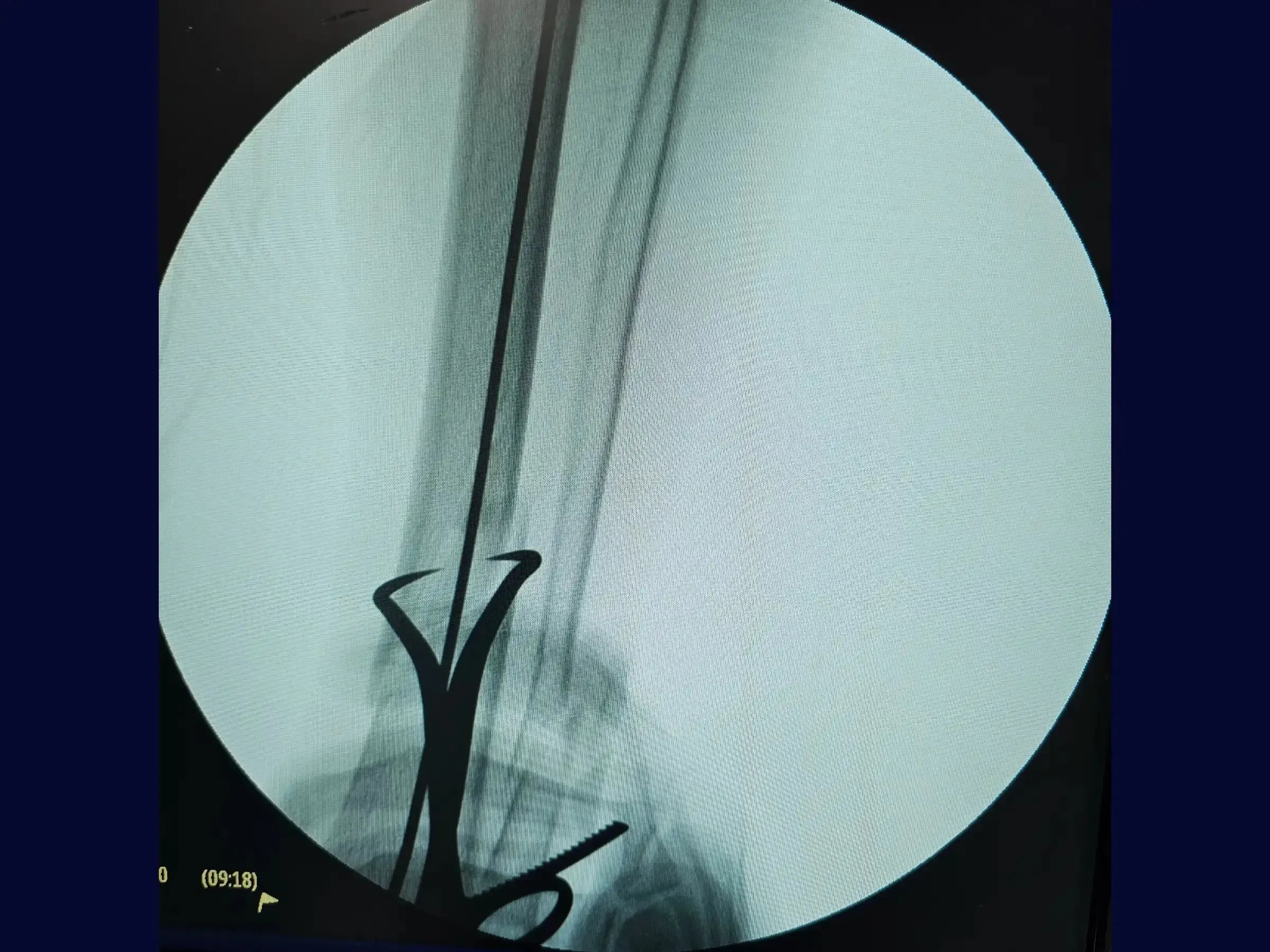
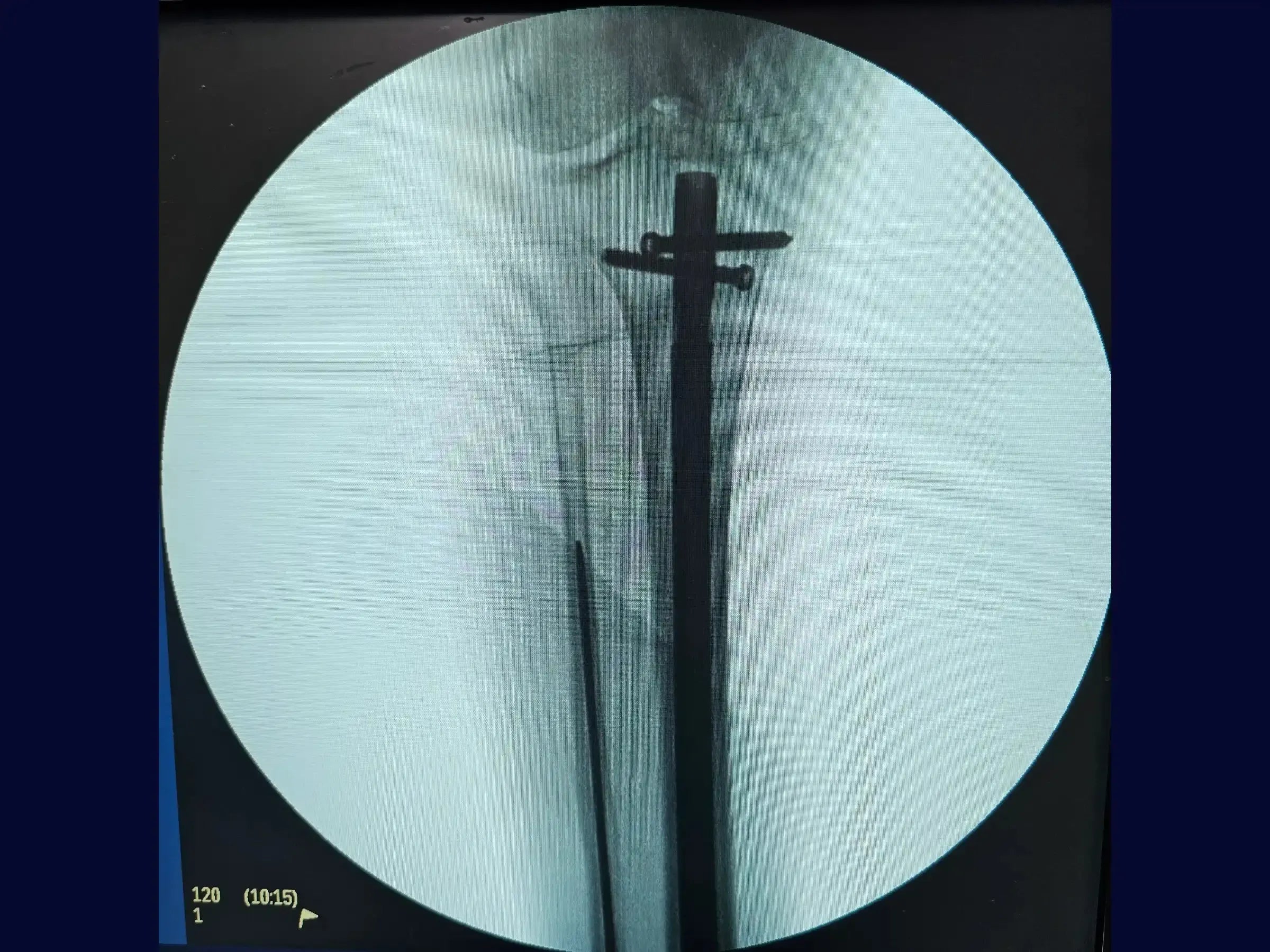
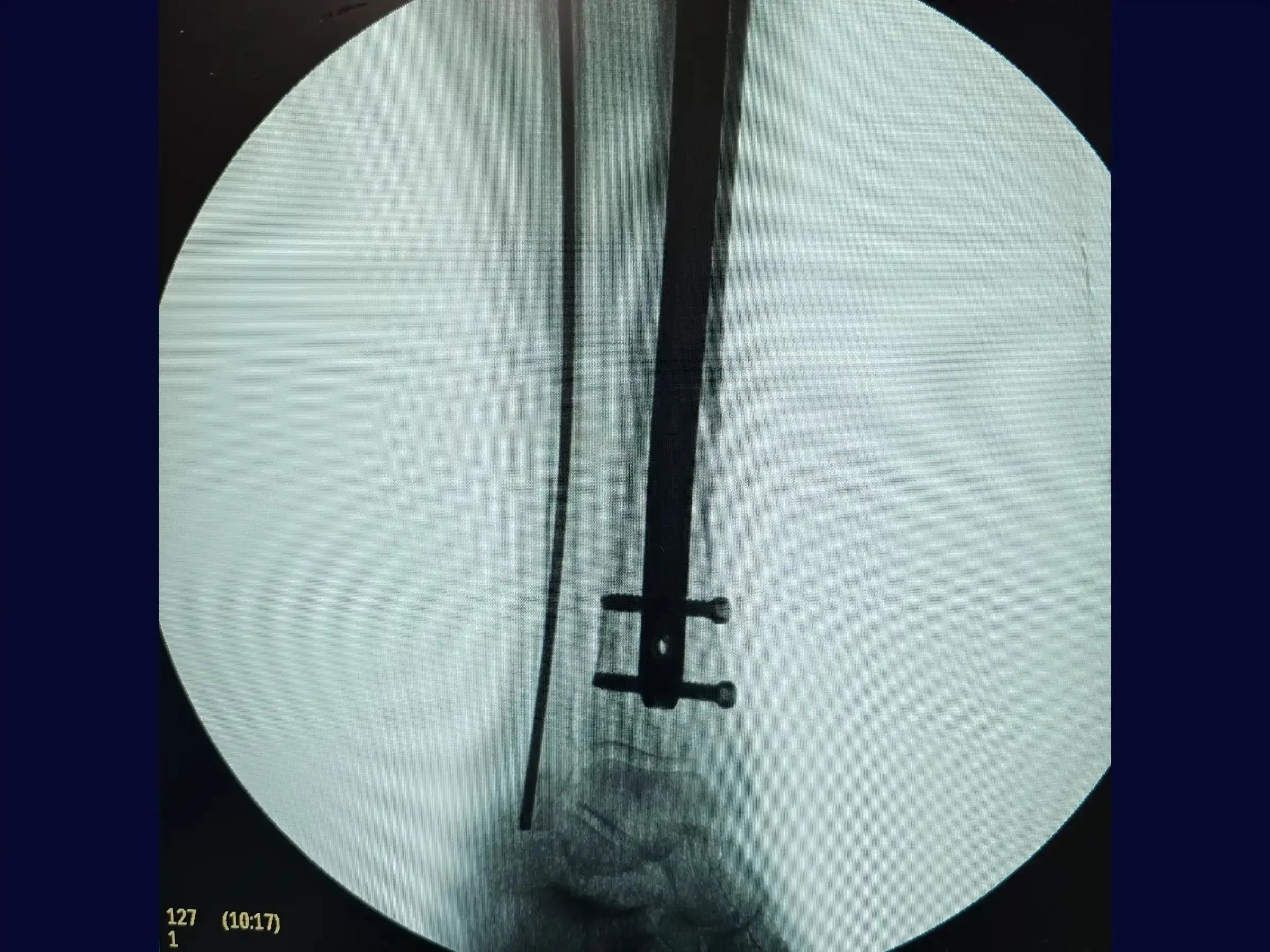
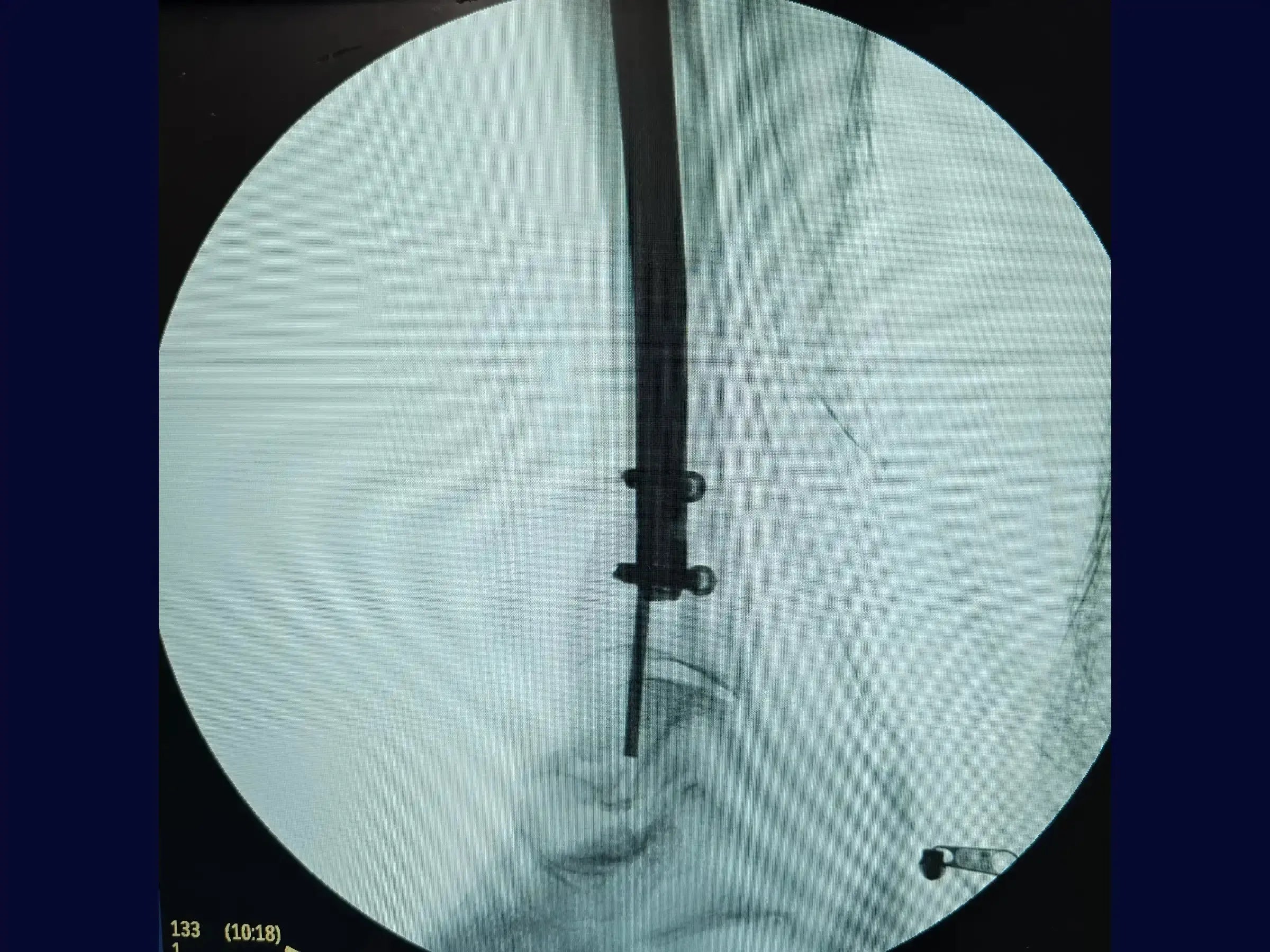
- Reduction and Guidewire Insertion: Methodology for percutaneous reduction with a clamp, with progression of the olive-tipped guidewire and verification of its centralization in AP and lateral views, aiming for the center of the ankle.
- Reaming and Intramedullary Nail Introduction: Reaming techniques to enlarge the medullary canal and introduction of the largest diameter nail, maintaining the protective sleeve and protecting the articular cartilage.
- Proximal and Distal Locking: Execution of proximal locking percutaneously with the patient keeping the leg in a stable position, and "freehand" technique for distal locking screws, with precise skin marking to avoid friction with soft tissues.
- Optional Fibula Fixation: Indication and technique for fibula fixation with a TEN nail in distal fractures to optimize stability and allow early weight-bearing and ambulation.
- Closure and Rehabilitation: Skin closure and rehabilitation that allows full weight-bearing ambulation and a favorable prognosis.
Included Material:
- Complete Technical PDF: Full step-by-step procedure, from patient positioning to surgical closure.
Elevate your level in trauma surgery. Enroll now and master the technique of fixing distal tibial shaft fractures with an intramedullary nail via a suprapatellar approach, optimizing results and rehabilitation.
